Pretty Girls Read Books SVG PNG Graphics for Crafts
As a brand designer who’s helped over 80 local businesses refine their visual identity—from indie candle makers and botanical skincare studios to neighborhood bakeries and children’s book boutiques—I opened Pretty Girls Read Books SVG PNG with a very specific question in mind: “Does this graphic design asset strengthen real-world branding, or just add decoration?”
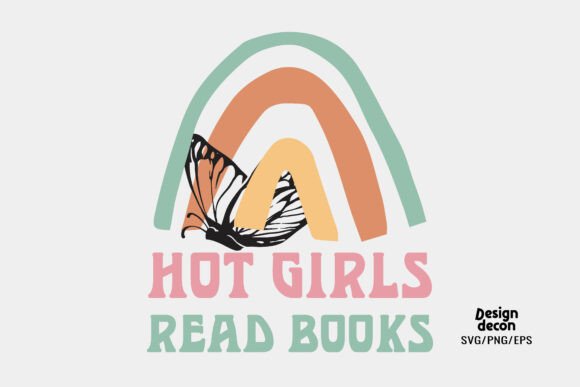
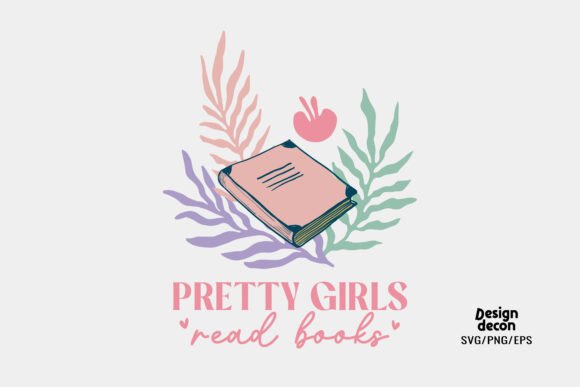
My test case? A new line of lavender-honey hand-poured candles launching at a beloved downtown boutique. The owner wanted packaging that felt warm, intelligent, and quietly feminist—not kitschy, not corporate, but unmistakably *human*. That’s where Pretty Girls Read Books SVG PNG landed: playful yet grounded, whimsical without being childish, and feminine without leaning into cliché. It reads as handmade, thoughtful, and gently literary—ideal for businesses rooted in storytelling, self-care, or slow living.
The mood it creates is approachable elegance: soft curves, balanced negative space, and a subtle wink in the phrasing. It doesn’t scream “trendy”—it whispers “I know my audience.” That makes it especially effective for small business branding where authenticity matters more than virality. It feels like a well-chosen bookmark slipped into a customer’s shopping bag—not an ad, but an invitation.
In practice, Pretty Girls Read Books SVG PNG shines across multiple touchpoints. For product labels, it works beautifully as a secondary brand mark beside a clean logo—think embossed on kraft candle jars or foil-stamped on tea box lids. On packaging design, it adds warmth to minimalist layouts without overwhelming them. As a decorative element on hang tags or thank-you cards, it reinforces brand voice while feeling personal. Social media graphics gain instant cohesion when used consistently across Instagram posts, Pinterest pins, and email headers—especially paired with warm neutrals or muted jewel tones.
It also elevates marketing visuals where emotional resonance matters most: seasonal campaign banners (“Spring Reads & Scented Candles”), printable inserts for subscription boxes, hero graphics for website banners, and even subtle watermarks on digital product mockups shared with wholesale buyers. Because it includes high-res PNG (3600×3600 px, transparent), SVG, and EPS files, it scales cleanly from tiny sticker accents to large-format posters—critical for local business owners juggling everything from farmers’ market booths to boutique shelf displays.
Where does it build real business value? First, stronger first impression: customers instantly recognize the tone—intelligent, kind, intentional. Second, better product recognition: repeated use across packaging, socials, and print materials builds visual memory. Third, clearer visual hierarchy—when placed thoughtfully, it guides attention *toward* your core message, not away from it. Fourth, more consistent brand identity: one cohesive illustration style ties together otherwise disparate assets. And fifth, improved customer trust: polished, intentional design signals care—not just in the product, but in how it’s presented.
It performs best where charm and clarity coexist: product labels with breathing room, packaging accents (like a ribbon seal or corner flourish), hero graphics for seasonal promotions, decorative brand elements on tote bags or stationery, boutique window signage, and social media campaign graphics tied to reading-themed events (e.g., “Summer Book Club Box” or “Local Author Spotlight”).
Use it carefully in contexts where precision outweighs personality: formal corporate branding (e.g., law firms or financial advisors), ultra-small labels (under 1.5 inches wide), crowded packaging with dense ingredient lists or compliance text, low-contrast backgrounds (test it over beige-on-cream!), luxury minimalist brands relying on stark typography alone, or any layout where the illustration competes with essential information like dosage instructions or allergen warnings.
Here’s what I always check before committing Pretty Girls Read Books SVG PNG to a live project:
- Test it on real packaging mockups—not just screen previews, but printed proofs on actual label stock and box material.
- Check black-and-white usage: Does it retain character when converted to monochrome? (It does—clean lines hold up well.)
- Preview it on small labels: At 0.75” height, does the text remain legible? (Best used ≥1.25” for readability.)
- Test it with your brand colors: Does it harmonize with your primary palette—or clash with saturated accent hues?
- Compare it with competitor packaging: Does it differentiate your offering, or blend in?
- Review print quality: The 300 dpi PNG delivers crisp output, but always verify CMYK conversion if printing professionally.
- Inspect SVG editability: Can you adjust spacing, isolate elements, or recolor individual parts? (Yes—the vector structure is clean and layered.)
- Test it beside your font stack: How does it pair with serif (e.g., Playfair Display), sans serif (e.g., Inter), script (e.g., Pacifico), handwritten (e.g., Quicksand), and display fonts (e.g., Bricolage Grotesque)? It holds its own best with friendly serifs and airy sans serifs.
- Confirm commercial licensing: This is non-negotiable. Ensure the license permits use in client work, physical product sales, and promotional campaigns—not just personal craft projects.
For creative entrepreneurs building a handmade business or local brand, Pretty Girls Read Books SVG PNG isn’t just clipart—it’s a strategic brand amplifier. When integrated intentionally, it supports editorial design thinking (story-driven visuals), web design consistency (cohesive UI elements), and packaging design integrity (unified tactile experience). It fits naturally within the broader ecosystem of modern design assets—whether you’re adapting it into a Canva template for social media managers or layering it into a custom product mockup for wholesale pitch decks.
Remember: the strongest small business branding doesn’t shout—it resonates. And Pretty Girls Read Books SVG PNG resonates because it’s both specific and sincere. It says something true about who your customer is—and who you are as a local business. Not just “we sell candles” or “we make soap,” but “we believe in quiet joy, deep reading, and the power of small, beautiful things.” That’s not decoration. That’s professional branding, done right.