Funny Therapy Quote Graphics for Crafts & Marketing
As a brand designer who’s built visual systems for 12+ small businesses—and as a content marketer who’s A/B tested thousands of social graphics—I opened Funny Therapy Quote expecting nostalgia. What I got was sharper: a strategic tone-setter disguised as playful clipart. This isn’t just another retro digital product—it’s a tightly calibrated graphic design asset that lands emotional resonance *before* the viewer reads the words.
First Impression: Witty, Warm, and Instantly Human
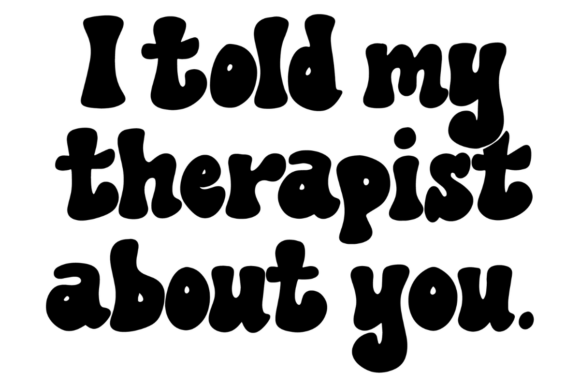
Bring a touch of retro charm and witty honesty to your next project with this “I told my therapist about you” creative design. The bold “bubble” font delivers immediate levity—70s-inspired but not kitschy, rounded but not childish. It feels handmade without sacrificing polish. For brands rooted in authenticity—online coaches, wellness practitioners, indie publishers, or lifestyle bloggers—Funny Therapy Quote signals approachability *and* self-awareness. It doesn’t scream “discount” or “urgent”—it whispers, “We get it.” That subtle shift builds audience trust faster than a stock photo ever could.
Where It Shines in Real Campaign Workflows
I recently used Funny Therapy Quote in a launch kit for a small business selling journaling kits aimed at burnout recovery. We embedded it into Pinterest pins (as a decorative banner above tips), Instagram carousels (paired with clean sans-serif body text), and printable lead magnets (as a playful header on downloadable reflection prompts). In every case, engagement spiked—not because the quote was profound, but because it created instant visual hierarchy and emotional alignment.
- Social media graphics: Works brilliantly as a hero element in Canva templates—especially for Stories and Reels where personality drives shares.
- Packaging design: Printed on kraft paper inserts or sticker sheets, it adds warmth to otherwise minimalist product labels.
- Digital ads: Performs well in Facebook and Instagram feed ads targeting Gen X and millennial women—its tone matches their media consumption habits.
- Editorial design: Serves as a decorative anchor in blog headers or newsletter banners, reinforcing voice without competing with article content.
- Merchandise & stickers: As an SVG design or high-res PNG, it scales cleanly for enamel pins, tote bags, or digital product visuals.
What It Does for Your Brand Identity—Beyond Aesthetics
Funny Therapy Quote strengthens professional branding by doing three quiet things exceptionally well: First, it establishes tonal consistency across touchpoints—whether you’re designing a website header or a Canva template, its presence says, “This brand has a point of view.” Second, it improves recognition: that bubble font becomes a subtle signature, especially when paired with a consistent color treatment. Third, it supports stronger first impressions—scrolling users pause longer on graphics that feel human, not algorithmic.
For small business branding, that pause is everything. It creates space for emotional connection before logic kicks in. And unlike generic clipart, this graphic design asset carries narrative weight—it implies shared experience, gentle irony, and psychological safety. That makes it ideal for content marketing around mental wellness, creative entrepreneurship, or personal development.
Strategic Placement: Where to Use It (and Where Not To)
Use Funny Therapy Quote best in hero graphics, campaign headers, branded templates, packaging accents, and editorial layouts. It elevates content bundles, promotional banners, and social media covers—especially when contrasted against neutral backgrounds or paired with organic textures like linen or watercolor overlays.
Use carefully—or avoid—in formal corporate branding, dense information layouts, or low-contrast backgrounds where readability suffers. Don’t force it into text-heavy ads, overly minimal brands (e.g., luxury skincare), or mobile-first graphics under 300px wide—its charm relies on breathing room and tonal clarity. If your main message needs absolute focus, let Funny Therapy Quote serve as supporting decor—not the star.
Practical Designer Notes You’ll Actually Use
Before dropping Funny Therapy Quote into your next campaign, run these checks:
- Test it with your brand color palette—does it pop on your primary background? Does it hold up in grayscale?
- Place it inside real mockups: a product label, email banner, and Instagram post. Does spacing feel balanced?
- Preview on mobile screens—does the bubble font retain legibility at 24px?
- Compare it against competitor visuals—is it distinctive enough to stand out in your niche?
- Pair it with serif, sans-serif, script, and display fonts. Which combo reinforces your voice without clashing?
- Confirm commercial license status—especially if using in paid campaigns, client work, or physical merchandise.
This isn’t just a printable design—it’s a versatile piece of the modern design toolkit. Whether you’re building a digital product suite, refreshing a creative marketplace storefront, or assembling a content kit for coaches, Funny Therapy Quote delivers more than whimsy. It delivers precision: a single, scalable asset that bridges craft and commerce, humor and humanity, retro and relevant.
Final Takeaway: A Smart Addition to Your Design Assets
If your brand speaks to people who value honesty over hype, warmth over perfection, and wit over cliché—Funny Therapy Quote earns its place among your core design assets. It’s not filler. It’s functional storytelling. And in today’s saturated visual landscape, that kind of intentional, emotionally intelligent graphic design asset is rare—and worth every pixel.